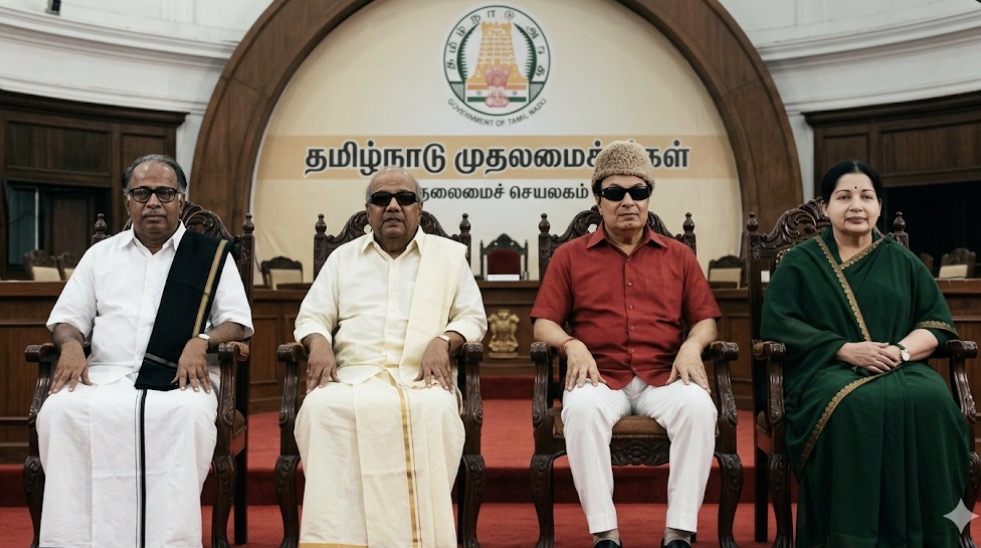
For over five decades, the political story of Tamil Nadu was written in two colors: the red and black of the DMK and the black, white, and red of the AIADMK. However, the May 4, 2026 election results have officially closed that chapter and opened a new one. For the first time since 1967, a non-Dravidian party has emerged as the single largest force in the state, signaling a massive shift in what the people want from their leaders and they dint get leaders like Vijay till now after MGR.
1. The Breakthrough of TVK
Actor-politician Vijay’s Tamilaga Vettri Kazhagam (TVK) has achieved what many thought was impossible. By securing 108 seats, the party has dismantled the long-standing duopoly.
This wasn’t just a victory of celebrity; it was a victory of strategy. TVK successfully positioned the DMK as its “political enemy” and the BJP as its “ideological foe,” creating a unique middle path that resonated with nearly 35% of the electorate. The message of Pirapokkum ella uyirkum (all are equal by birth) combined with a focus on transparent, youth-led governance, turned fan clubs into a formidable political machine.
2. A Mandate for Accountability
The results reflect a strong anti-incumbency sentiment. The outgoing DMK government, led by M.K. Stalin, faced significant hurdles. Despite popular welfare schemes, issues like urban infrastructure management in Chennai and perceived governance complacency led to surprising upsets—most notably Stalin losing his own stronghold of Kolathur.
The takeaway is clear: the modern Tamil voter is no longer satisfied with legacy alone. They are demanding:
• Economic Opportunities: Better job creation for the state’s high-literacy youth.
• Transparent Governance: A move away from traditional “cash-for-votes” politics.
• Infrastructure: Reliable flood management and better roads in Tier-II cities.
3. The Future of Coalition Politics
With no party reaching the 118-seat majority mark, Tamil Nadu has entered its first-ever Hung Assembly. This is a major educational moment for the public. We are moving from a “One-Party Rule” to a “Negotiation Era.”
The TVK now faces the challenge of building a stable government by potentially reaching out to smaller parties. This shift ensures that more voices—representing various castes, regions, and ideologies—will have a seat at the table. It forces the major parties to compromise and collaborate, which can lead to more balanced policy-making.
4. The Resilience of Dravidian Ideology
While the power structure has changed, the core values of Tamil Nadu—Social Justice and State Autonomy—remain the heartbeat of its politics. Even the newcomer TVK has anchored its principles in these traditional values, proving that while the faces of leadership may change, the soul of Tamil political thought remains deeply rooted in equality and regional pride.
Conclusion
Tamil Nadu is currently the most exciting democratic experiment in India. By breaking the 60-year binary system, the people have sent a message: “We are watching, and we expect more.” For the readers of openpost.in, the lesson is that democracy is always evolving. As we move into this era of coalitions, the power has truly returned to the hands of the people.